Posted on Friday, November 20th, 2026 at 12:34 pm
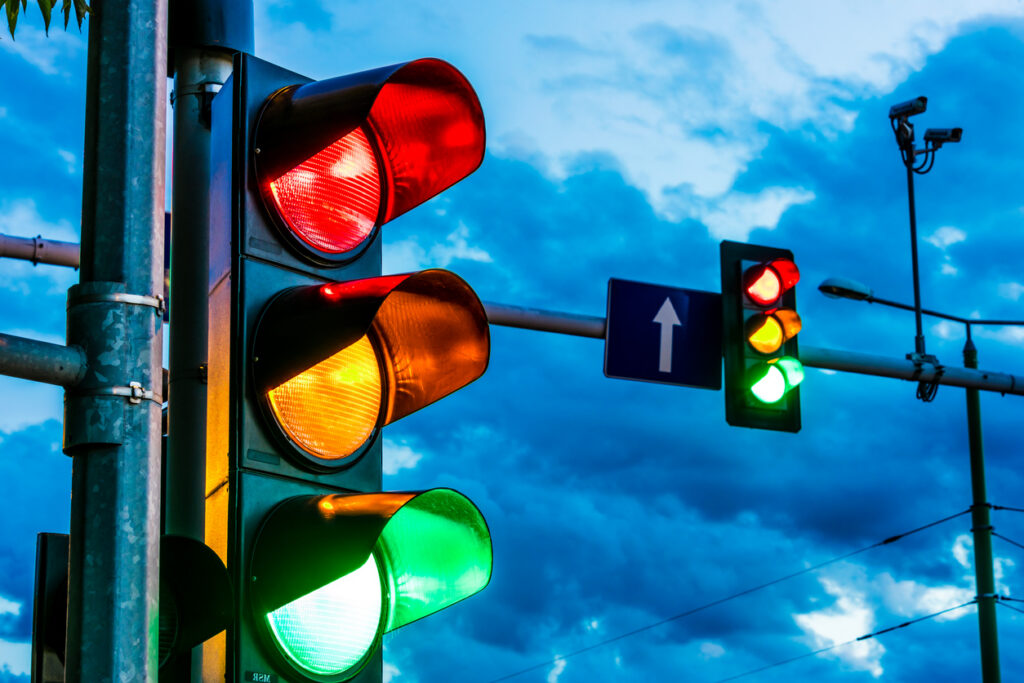
What To Do at an Intersection With Flashing Lights in Alabama
Approaching an intersection with flashing traffic lights can be confusing. You may wonder whether to stop, slow down, or wait for another driver. Making the wrong choice can lead to a serious collision.
In Alabama, a flashing red light means stop. A flashing yellow light means proceed with caution. These signals have different rules. Drivers must understand which one applies. Knowing what to do at an intersection with flashing lights in Alabama can help you avoid traffic violations and protect others on the road.
What Does a Flashing Red Light Mean in Alabama?
A flashing red traffic light works much like a stop sign. Under Alabama law, drivers must come to a complete stop before proceeding. You should stop at the marked stop line. If there is no line, stop before entering the crosswalk. If neither exists, stop where you can see approaching traffic before entering the intersection.
After stopping, follow the normal right-of-way rules for stop signs. A flashing red light does not mean you can simply slow down and continue driving.
What Does a Flashing Yellow Light Mean in Alabama?
A flashing yellow light tells drivers to use caution when approaching an intersection. Unlike a flashing red light, it does not require a complete stop. However, you must watch for other vehicles, pedestrians, and potential hazards.
When approaching a flashing yellow light, you should:
- Reduce your speed when necessary
- Look for vehicles entering from nearby roads
- Watch for pedestrians and cyclists
- Be prepared to stop if conditions require it
- Continue only when you can safely cross the intersection
A flashing yellow signal does not give you permission to ignore other traffic rules. You must still drive carefully and avoid creating a collision risk.
What If All Four Directions Have Flashing Red Lights?
When every approach has a flashing red signal, drivers should treat the intersection like an all-way stop. Each driver must stop completely before proceeding. Generally, the driver who arrives first should go first. When two vehicles arrive at approximately the same time, applicable right-of-way rules help determine who proceeds.
Drivers turning left must also watch for approaching vehicles and pedestrians. Never assume another driver will stop simply because the signal requires it.
What if One Direction Has Flashing Yellow and Another Has Flashing Red?
Some intersections use flashing yellow lights for the main road and flashing red lights for crossing traffic. Drivers facing flashing red must stop and yield as required before entering the intersection. Drivers facing flashing yellow may continue without stopping, but they must proceed cautiously.
For example, a driver approaching a flashing red light on a side street must wait until crossing traffic has cleared. Drivers facing yellow should still watch for vehicles that fail to yield.
What Should You Do if a Traffic Light Stops Working?
A completely dark traffic signal is different from a flashing traffic signal. If the lights are not working, slow down and check for other traffic controls or directions from police officers. When no functioning signal or other control governs the intersection, drivers should use extreme caution and follow applicable right-of-way rules.
Do not assume you automatically have the right of way. A malfunctioning signal can create confusion, especially during storms or power outages.
Who Is at Fault in an Accident at a Flashing Traffic Light?
Liability depends on how each driver acted before the collision. A driver who fails to stop at a flashing red light may have been negligent. However, a driver facing a flashing yellow may also be responsible if they travel too fast or fail to use reasonable caution.
Evidence that can help determine fault includes:
- Traffic camera or dashcam footage
- Witness statements
- Police reports
- Photographs of the intersection
- Vehicle damage and skid marks
These details can help establish whether a driver violated traffic laws and caused the crash.
Alabama follows a strict contributory negligence rule. In many ordinary negligence cases, an injured person who contributed to the accident may be barred from recovering compensation.
Contact Farris Riley Injury Law To Schedule a Free Consultation With a Birmingham Car Accident Attorney
If another driver’s negligence caused your injuries, you may have the right to pursue compensation for medical bills, lost wages, and other damages. Contact Farris Riley Injury Law at 205-324-1212 for a free consultation with a Birmingham car accident lawyer today.
We represent people injured in traffic accidents throughout Alabama. We can help you understand your legal rights and pursue the compensation you truly deserve.